
Solar Cleaning Robot vs Manual Cleaning O&M Savings
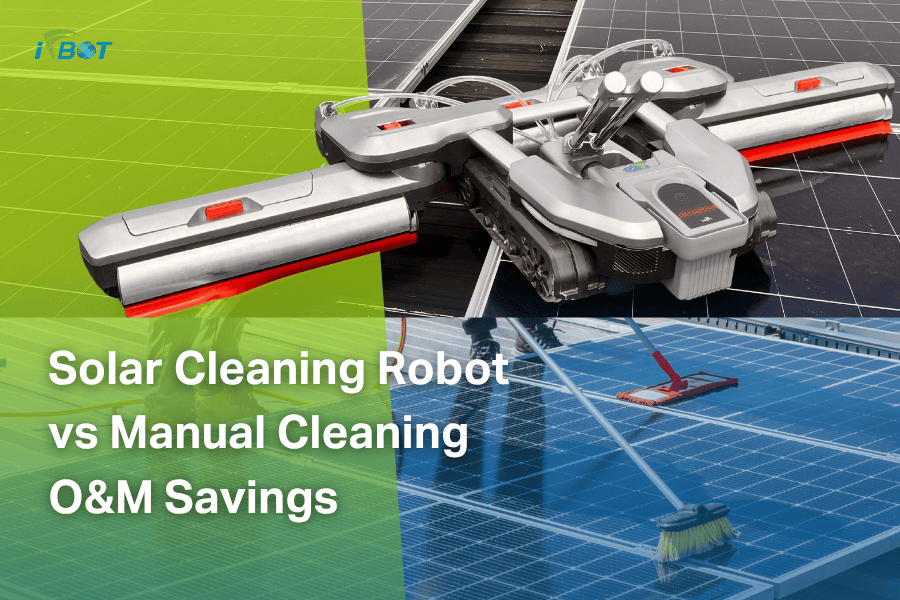
Calculating O&M Savings: Robot vs Manual Cleaning on Large PV Farms
Large PV farms do not lose money only when equipment fails. They also lose money when dirt, dust, bird droppings, industrial residue, and inconsistent cleaning reduce output little by little across thousands of modules. That is why solar panel cleaning is not just a maintenance task. It is an O&M cost lever.
For utility-scale solar, average O&M costs have fallen significantly over time, but they still matter. NREL cites research showing average utility-scale PV O&M costs declining from about USD 31/kWAC-year in 2011 to about USD 16/kWAC-year in 2017. In other words, operators have already squeezed many obvious efficiencies out of solar operations, which makes avoidable cleaning-related cost even more important today.
At the same time, soiling remains a real performance issue. IEA PVPS says soiling causes average global energy losses of around 4% to 7%, while NREL notes that losses can become much worse in dusty climates and that cleaning decisions directly affect plant economics. IEA PVPS also states that cleaning schemes can reduce PV production losses by as much as 6% to 8% during summer months in some climates.
That is the real business case for robotic cleaning on large PV farms: not just replacing labor, but reducing the total cost of keeping a solar plant at target performance.
What large PV operators are really comparing
When operators compare manual cleaning with robotic cleaning, they are usually not asking, “Which method can remove dust?” Both can.
The real question is this:
Which cleaning model gives the lowest total O&M burden while protecting energy yield?
That comparison usually comes down to five cost buckets:
labor
water
access and logistics
safety exposure
lost generation from delayed or inconsistent cleaning
IEA PVPS explicitly notes that cleaning is a local economic decision shaped by labor costs, water availability and cost, feed-in tariffs or electricity value, and weather conditions. In very large plants, the correct comparison is not robot cost versus one day of manual labor. It is robot-enabled cleaning strategy versus the full annual cost of manual execution and delayed response to soiling.
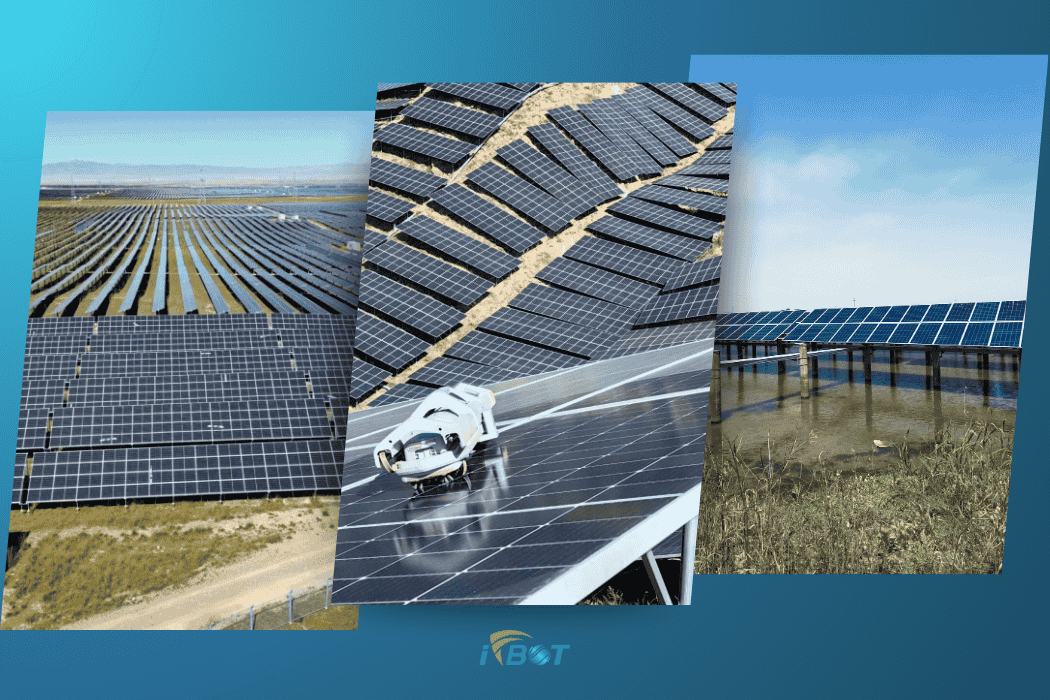
Where manual cleaning becomes expensive on large solar farms
Manual cleaning often looks simple on paper. In practice, it becomes expensive at scale.
On a large PV farm, manual cleaning typically introduces:
repeated labor mobilization
variable cleaning quality from crew to crew
slower response when soiling spikes suddenly
water handling, transport, or treatment requirements
higher site-access burden across long rows and remote blocks
greater worker exposure on slopes, edges, and harsh climates
NREL notes that utility-scale PV cleaning currently costs about USD 0.20 to USD 0.50 per module, depending on system size and location. NREL also gives an example: at USD 0.20 per module, a single cleaning of a 10 MW system with 365 W modules costs more than USD 5,000.
That number gets more serious very quickly at utility scale.
Using NREL’s module-cost example, a 100 MW plant built around 365 W modules would have roughly 273,973 modules. That means one manual cleaning cycle at USD 0.20 to USD 0.50 per module lands at roughly USD 54,795 to USD 136,986 per cleaning. At 12 cleanings per year, that becomes about USD 657,534 to USD 1.64 million annually before you even account for water logistics, supervision, access inefficiencies, or lost output between cleanings.
This is where robotic cleaning starts to change the economics.
How solar cleaning robots reduce O&M cost
A solar panel cleaning robot does not magically erase all cleaning costs. What it does is change the cost structure.
Instead of relying heavily on repeated manual labor and water-intensive field routines, robotic cleaning can reduce O&M pressure in four practical ways.
1. Lower dependence on recurring manual labor
Manual cleaning scales poorly because every additional cleaning round usually means more crew hours, more coordination, and more travel across the site. Robotic cleaning shifts more of the work toward scheduled, repeatable, equipment-based operation.
That matters because soiling is not a one-time issue. NREL and IEA PVPS both emphasize that cleaning frequency has to be optimized over time, based on local conditions and the economics of soiling loss versus cleaning cost. A robot-friendly cleaning program makes higher-frequency maintenance more realistic than a purely labor-led model.
2. Lower water use, especially in dry or water-stressed regions
Water is often treated as a minor line item until operators calculate transport, storage, pumping, quality control, disposal, and local scarcity risk. IEA PVPS notes that the cost effectiveness of cleaning depends heavily on local labor and water conditions. For many solar sites, especially in arid and semi-arid regions, this becomes a major operational constraint.
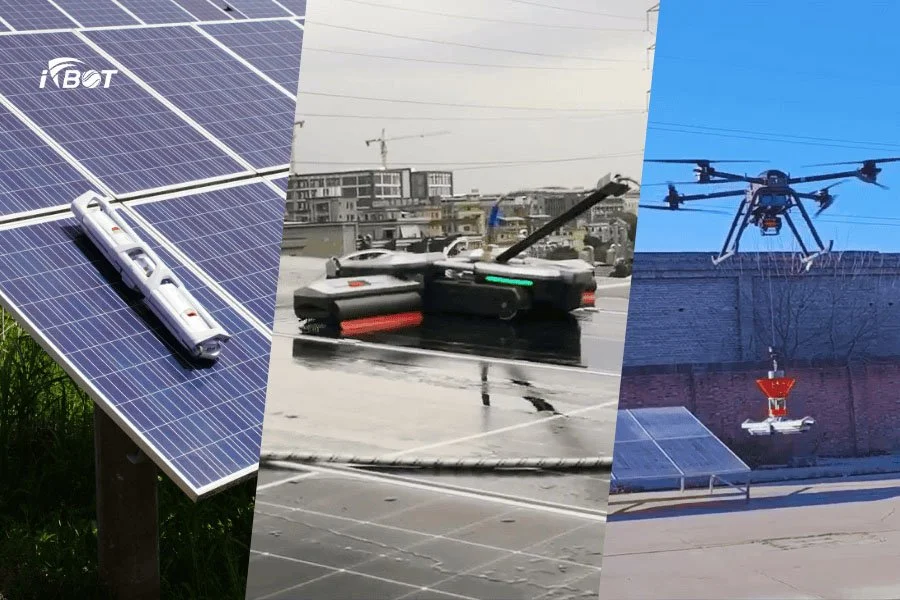
This is exactly why dry-cleaning robots matter. The IFBOT X3 is designed as a water-free cleaning solution, while the IFBOT M20 supports wet cleaning where bonded grime or site conditions justify water-assisted cleaning. IFBOT’s own environmental guidance also frames robotic cleaning as a way to reduce water waste in solar maintenance.
3. More consistent cleaning across large arrays
Large sites do not suffer only from dirt. They suffer from uneven cleaning quality.
IEA PVPS notes that soiling is not always distributed uniformly across a plant or even across a single module surface. That means inconsistent manual cleaning can leave residual performance losses behind, especially at the lower edges of modules or in harder-to-reach areas. A robotic system is not valuable only because it cleans. It is valuable because it can clean in a more repeatable way.
4. Better access and lower operational friction
On big sites, time is lost not only in brushing modules but in getting crews and tools where they need to go. That includes long row access, terrain changes, and reaching difficult sections safely.
This is where equipment design matters. IFBOT’s recent product and insight pages position its systems around lightweight deployment, water-free or water-assisted cleaning depending on site needs, and drone-assisted access for hard-to-reach areas. The IFBOT UAV system is built specifically around improving deployment access in remote or difficult installations.
The hidden savings: avoided energy loss
Many solar cleaning discussions focus only on the cleaning invoice. That misses the bigger number: energy not generated because the plant stayed dirty too long.
IEA PVPS says average global soiling losses are around 4% to 7%. NREL also notes that in high-soiling regions, annual losses can be much higher, and revenue impacts for large sites can reach millions of dollars.
Here is a simple illustration.
A 100 MW plant operating at a 20% capacity factor generates about 175,200 MWh per year. A 4% to 7% soiling loss means roughly 7,008 to 12,264 MWh of generation at risk annually. Even before assigning a project-specific PPA price, that is a meaningful amount of lost production.
This is why robotic cleaning often makes the most financial sense on:
utility-scale plants with long cleaning routes
high-dust or high-pollen environments
water-constrained sites
sites where manual cleaning happens too slowly or too infrequently
sites where labor cost or labor availability is becoming a constraint
Manual cleaning vs robotic cleaning on large PV farms
Manual cleaning is usually stronger when:
the site is small
cleaning is infrequent
labor is cheap and easy to mobilize
water access is simple
terrain and access risk are low
Robotic cleaning is usually stronger when:
the site is large and cleaning must be repeated regularly
soiling returns quickly
labor or water costs are rising
access is difficult
operators want more predictable cleaning quality
O&M teams need to reduce worker exposure and scale without adding headcount
That does not mean every site should fully eliminate manual cleaning. In practice, many utility-scale operators move toward a hybrid model: robotics for routine or high-frequency cleaning, and targeted human intervention only when unusual contamination or maintenance exceptions appear.
Which IFBOT system fits which O&M scenario?
This is where IFBOT can speak clearly and practically.
For dry, dusty, water-sensitive sites
The IFBOT X3 makes the strongest O&M case where frequent dry cleaning is needed and water is expensive, scarce, or operationally inconvenient. It is positioned by IFBOT as a lightweight, portable, water-free solution for routine maintenance.
For sticky grime, industrial residue, or periodic deep cleaning
The IFBOT M20 is better suited where operators need water-assisted cleaning for heavier contamination. IFBOT lists a dual-brush water-washing system, a weight of 12.7 kg, and productivity of 1000 m²/h on the M20 product page.
For hard-to-access or remote utility-scale sections
The IFBOT UAV system is relevant where access itself is a cost driver. If crews lose time and money simply getting cleaning equipment to the right part of the site, deployment efficiency becomes part of O&M savings too.
The real O&M conclusion
For large PV farms, the economic question is no longer whether panels should be cleaned. The evidence is already clear that soiling can materially reduce output, and that cleaning decisions should be optimized around site economics.
The more useful question is this:
How can a plant clean often enough to protect energy yield without letting labor, water, access, and safety costs grow out of control?
That is where solar cleaning robots create O&M savings.
They help large sites move away from a labor-heavy, reactive model and toward a more repeatable, scalable, and data-driven maintenance model. On the right site, that can mean:
lower recurring labor burden
lower water-related operating cost
more consistent cleaning quality
faster response to soiling buildup
lower operational friction across large arrays
better protection of energy yield
For utility-scale operators, that is not just a maintenance improvement. It is an O&M strategy upgrade.
Relevant insights:
FAQs
Do solar panel cleaning robots reduce O&M costs on large PV farms?
Yes. They can reduce dependence on recurring manual labor, lower water use, improve cleaning consistency, and make it easier to maintain energy yield through more regular cleaning. The biggest savings usually appear on large, dusty, water-constrained, or hard-to-access sites.
Is robotic cleaning always cheaper than manual cleaning?
Not always. On small or low-soiling sites, manual cleaning may still be adequate. Robotic cleaning becomes more compelling as plant size, cleaning frequency, labor cost, water cost, and access complexity increase.
How much output can soiling reduce?
IEA PVPS says average global soiling losses are around 4% to 7%, though the number can be much higher in dusty environments.
What is the main financial advantage of robotic cleaning?
The main advantage is not only reduced labor. It is protecting revenue by making timely, repeatable cleaning easier to execute across a large site.
Which IFBOT robot is best for utility-scale solar farms?
That depends on the cleaning challenge. The X3 suits dry routine cleaning and water-sensitive sites, the M20 suits heavier grime and wet cleaning, and the UAV system helps in hard-to-access sections.