
Dry vs Wet Solar Cleaning Robots: Key Differences
Dry vs Wet Solar Panel Cleaning Robots: What’s the Difference and Why It Matters
Solar energy output depends on one thing that often gets overlooked: how clean the panels are. Dust, sand, pollution, bird droppings, and industrial residue can reduce power production by 5–30%, and in some regions even more.
For large solar farms and commercial rooftops, keeping panels clean is not optional — it’s a core part of performance and ROI.
Today, solar operators are increasingly turning to robotic cleaning systems to reduce manual labor, improve safety, and ensure consistent efficiency. But one question still comes up in almost every project:
Should you choose a dry cleaning robot or a wet cleaning robot?
This article breaks down both methods, explains the differences, and shows how to choose the right solution for your site — using real operational logic, not guesswork.
(And yes, we’ll also explain where IFBOT X3 and IFBOT M20 fit into the picture.)
1. Why Solar Panel Cleaning Methods Matter
Before comparing dry vs wet robots, it’s important to understand why the cleaning method affects more than just the cleaning itself:
Energy yield & annual production
Water availability and usage cost
Labor demand and operator safety
Maintenance cycles and robot lifespan
Environmental impact (especially in desert or remote sites)
Overall ROI and O&M strategy
Choosing the wrong cleaning method can lead to over-cleaning, under-cleaning, or wasted resources.
2. What Is Dry Cleaning?
Dry cleaning robots rely only on mechanical action — typically rotating microfiber rollers or brushes — to remove dust and loose debris.
How dry robots work
Soft rollers lift dust without scratching the surface
Lightweight structure reduces load on panels
Ideal for daily or frequent cleaning cycles
Zero water used
Low O&M cost
Very fast cleaning speed
Best for:
Desert regions with extreme dust
Water-scarce countries (Middle East, India, Australia)
Utility-scale farms with large surface areas
High-tilt rooftops where water would run off instantly
Sites needing daily/weekly cleaning cycles
Key Advantages
No water logistics or tanking costs
Lowest cost per cleaning cycle
Lower carbon footprint
Suitable for automated nightly cleaning
Protects panel coatings when using soft rollers
Where IFBOT fits
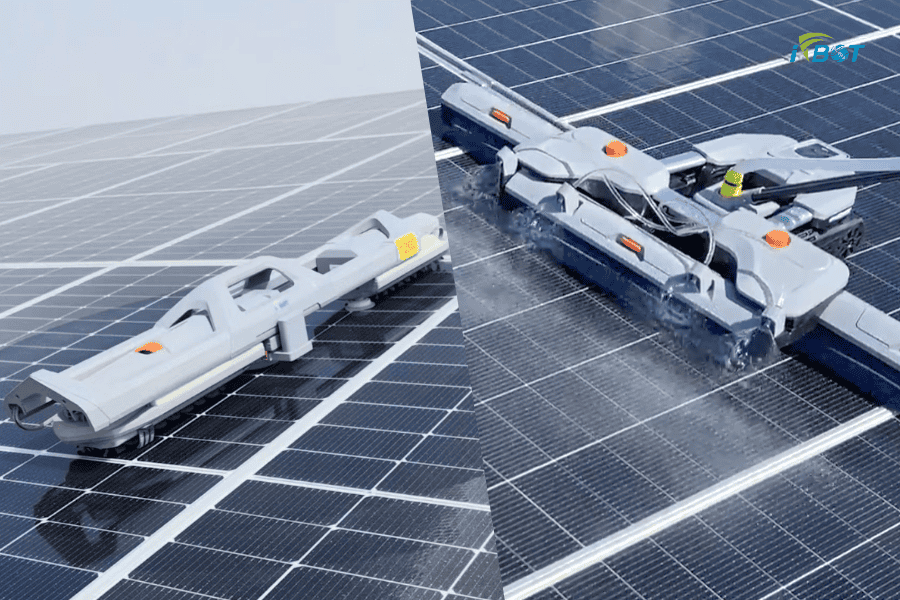
The IFBOT X3 is a fully dry-cleaning robot designed to be:
80% lighter than conventional robots
Easy to carry and deploy on rooftops or commercial arrays
Safe for framed and frameless panels
Highly effective for light to medium dust accumulation
It’s award-winning for a reason — dry cleaning done right is incredibly efficient.
3. What Is Wet Cleaning?
Wet cleaning robots use a water spray system combined with brushes or rollers to remove sticky, oily, or crusted debris.
How wet robots work
Water dissolves hardened dirt
Brushes remove stubborn residue
Often used with deionized or RO water to avoid streaks
Designed for lower cleaning frequency
Best for:
Coastal areas (salt deposits)
Industrial zones (oily residue, pollution)
Farms under birds migration routes
Regions with affordable water supply
Commercial rooftops where dirt is irregular and sticky
Key Advantages
Removes bonded contaminants
Requires fewer cleaning cycles
Beneficial after heavy storms or long periods without cleaning
Where IFBOT fits
The IFBOT M20 is a hybrid-capable robot that supports:
Wet cleaning with precise water control
Strong rollers that handle stubborn dirt
Remote control operation for safety
Designed for versatility across mixed environments
It’s especially valuable for C&I (Commercial & Industrial) sites where dirt varies by season.
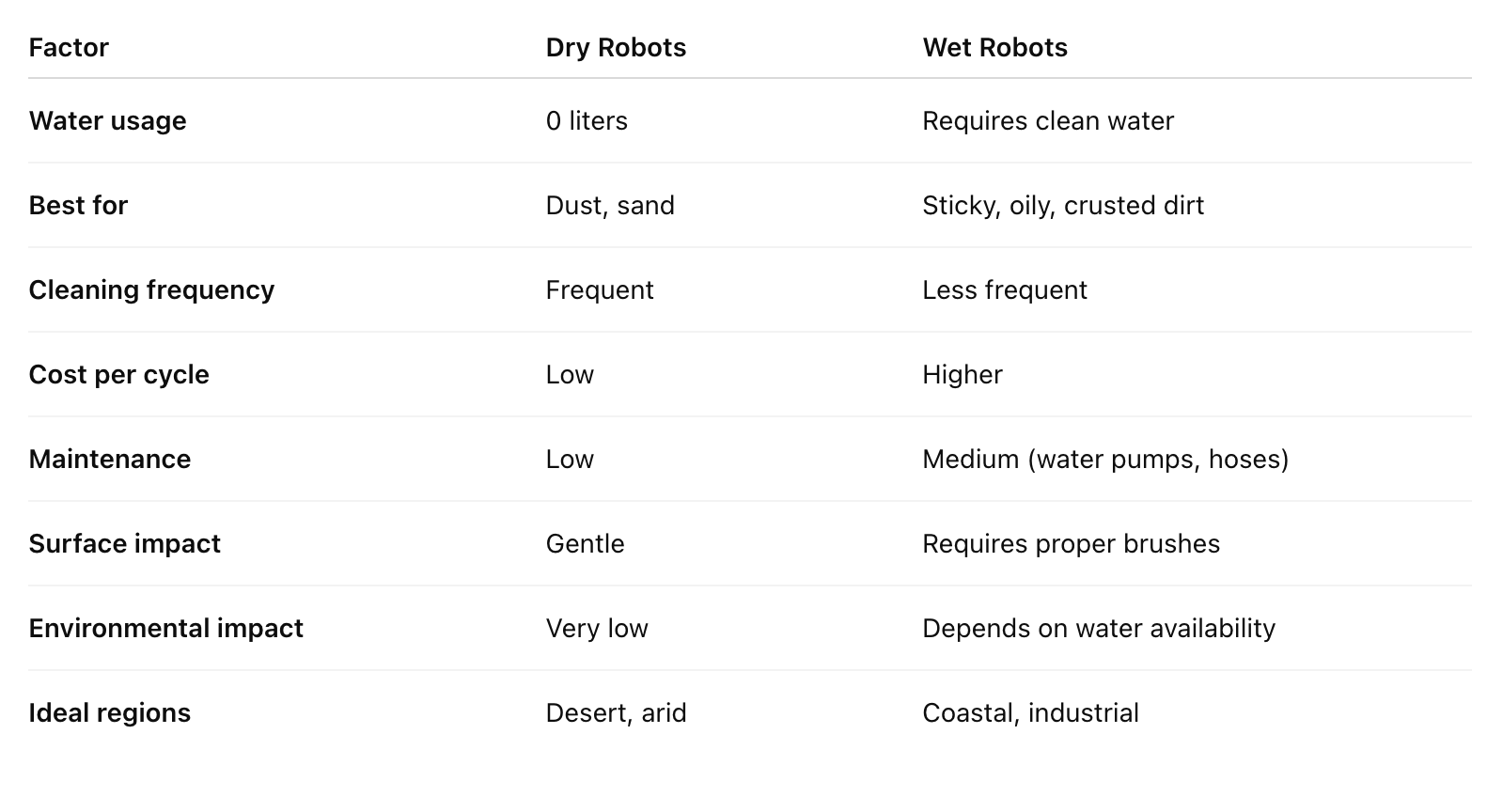
4. Dry vs Wet: A Side-by-Side Comparison
5. Which Robot Should You Choose?
Choose Dry Cleaning if:
Water is scarce
Dust accumulates daily
You manage large-scale solar plants
You prefer automated, daily cleaning
You want the lowest O&M cost
→ Best IFBOT option: X3
Choose Wet Cleaning if:
Panels get sticky stains or bird droppings
Water supply is available
You operate near the sea, factories, or airports
Your dirt problem is not just dust
→ Best IFBOT option: M20
In many cases, the correct answer is… both.
Many sites adopt:
Dry robots for regular cleaning, and
Wet robots for occasional deep cleaning
This balanced approach keeps panels producing at peak levels year-round with minimum cost.
6. How IFBOT Helps You Make the Right Choice
Choosing a solar panel cleaning solution shouldn’t feel like guesswork.
IFBOT supports you with:
Site condition assessment
Panel type evaluation
Cleaning frequency calculation
ROI estimation
Custom O&M strategy for your layout
Our robots (X3 and M20) are designed to perform in real-world conditions — from desert farms to dense industrial rooftops.
7. Final Takeaway
The difference between dry vs wet cleaning robots is not just about the cleaning method. It’s about:
How your site behaves
The dirt types you face
Water availability
Long-term maintenance
Efficiency and ROI
Environmental responsibilities
With the right robot, solar operators can recover power loss, reduce manual labor, protect panel surfaces, and save thousands of dollars annually.
IFBOT is here to support operators at every scale — with technology built for real problems, not theoretical ones.